Tuesday, November 14, 2006

Little Children

Little Children, Todd Field 2006.

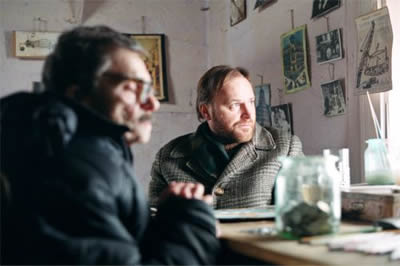
Every once and awhile I will see a film that really crawls under my skin. It makes me fidget in my chair, uncomfortable, uneasy, and disturbed. Todd Field's Little Children is one of those films. It could be that this is a a purely personal reaction, striking at things that are close to me and not close to others, but I think in many ways this film dwells on subject matter that, in its own unusual way, is universal. Don't get me wrong, this film isn't gruesome or brutal, its simply poetically nasty in soft subversive strokes.

For those of you who have or will see the Little Children and also happen to read this review, you will probably proclaim me an idiot for suggesting there is anything 'soft' or 'subtle' about this film and then proceed to give me a good whack to the head. I wouldn't blame you. It's just the way I feel/interpret this film. It is after all, mentioned in different variations throughout the film that (paraphrasing) it isn't about this, its about something else. This is how I interpret the film. This isn't about infidelity or failed, miserable marriages its about something else, but I am getting ahead of myself.

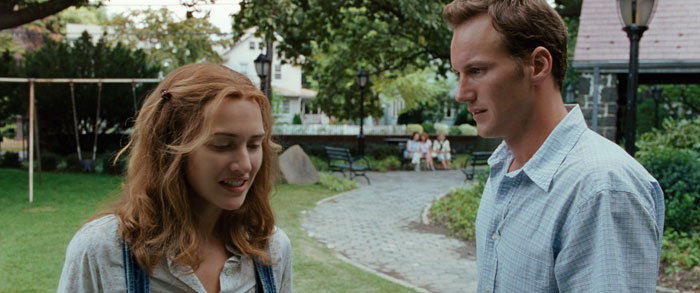
The film has two central characters, Sarah (Kate Winslett) and Brad (Patrick Wilson), although in the end Sarah is the main character. There are other important characters in the film, notably Jackie Earle Haley's disturbing yet touching role as Ronnie, but ultimately these characters and stories revovle around the hub that is Sarah and her impending affair with Brad (I don't think I'm giving anything away here).

Each of these characters are stuck in marriages that are stale, routine, and lifeless. In Sarah's case, her husband is either working or feeding his internet porn addiction. In Brad's case his wife, Kathy (Jennifer Connelly), has more of an emotional connection with the kids she is filming for her latest documentary than she has with him.

Brad is completely immasculated within his relationship with Kathy. The stereotypical gender roles have been reversed with Kathy going to work every day while Brad stays home and takes care of their son. He's also a good cook, going so far as to even cook the meal when dinner guests come over. His wife forces him to cancel his subscriptions to any sports magazines, and to really make matters worse, Brad is completely invisible to Kathy when she is home, unless of course she is concerned about his progress with the bar exam. The women at the playground call Brad prom king, but in this relationship, his son, who wears a crown, is the prom king. And wait, just to really pile things on, Kathy's mother is rich and she sends money to help the family out (documentary filmmaking evidently isn't very lucrative). It is little wonder that Brad is willing to embark on a new frienship with Sarah. In an interesting parallel it is important to remember there is one other character who is immasculated in the film, Ronnie.

Ronnie's storyline really unveils the idea that this film has little to do with the actual act of infidelity. Instead it has everything to do with fate, choices, our past, and most importantly our future. The woman at the book club calmy state that Madame Bovary is trapped, fated to the end she reaches, and Sarah calmly says there is something to be said for fighting against that fate, drawing obvious attention to the comparison between Sarah's character and Madame Bovary, but more importantly vocalizing the issues that have been present throughout the film.

Brad is trying to recapture his past to reinvent his future. Ronnie is trying to escape his past to reinvent his future. Are they doomed by fate or is there the possibility of choices? The idea of impending fate has been marked in the film by the constant presence of clocks, their clicking giving audible note to the time weighing down on the characters. There is also the ethereal, and sometimes physical, prominence of trains in the film, the train horn appropriating the emotional weight of "For whom the bell tolls". Ultimately, there is no definitive answer given, but there are suggestions for your to explore either way.

Little Children will not win any awards for 'feel good movie of the year', but it definitely is the most intriguing and thought provoking film I have seen thus far. It should be noted that there is extensive use of voice-over near the beginning of the film, but I found it stopped just as I was beginning to get annoyed with it. Don't shy from this movie under the belief it is simply about adultery, it is, if anything, about everything else but adultery. A deeply layered film, I am discovering more and more things even as I write this, I highly recommend it.

(as a side-note, I apologize if the second half of this post is a little jumpy, blogger was kind enough to erase 3/4 of my original review for this film right before I posted it so I had to start over).

Thursday, October 26, 2006

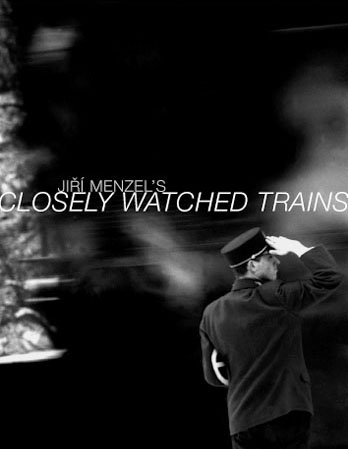
Ostre sledované vlaky (Closely Watched Trains)

Closely Watched Trains, Jiri Menzel 1966.

Splattered with the dark, yet lighhearted humor that seems to pervade everything Eastern European, Closely Watched Trains is one of those rare films that manages to simultaneously completely entertain the audience while carrying a level of subtext that is rich and pointed.

Milos Hrma comes from a family filled with great men. His great-grandfather got pelted in the head, his uncle managed to stop the invasion of Prague through the power of his hypnotism, and his father was a renowned train operator. This puts a fair amount of pressure on Milos to succeed in his new job as a train dispatcher.

Of course there is also pressure of other sorts growing on Milos. He happens to have no sexual experience, yet as he starts his new job it seems that wherever he turns he is confronted by sexuality. Much of the film centers around Milo, and his difficulties with woman, but it is done in a restrained and subtle (relatively, depending on how you look at it) way.

This story is set during World War II, so Czechoslovakia is currently occupied by German forces. Much of the subtext arises from this area of the film. The Germans are obviously simply symbols for the Soviet's who were occupying Czechoslovakia at the time. In a nice little twist, this is boldly given away by a poster of a twisted hand reaching down from above with a hammer and sickle near the wrist. This could plausibly be explained simply because the German's and the Soviet's didn't exactly get along as the war progressed.

Following along these lines would lead me to believe that Milo's impotence has as much to do with the occupation of the Germans/Soviets than any personal nervousness. It is not until Milo faces the SS that things begin to come together for him on the sexual front. In fact, the character most succesful with women is the character deeply involved with the partisans who are fighting against the occupation.

Its a hilarious film, so if you're looking for a classic comedy I'd give it a shot, but there is also a lot there, so if you're willing its one of those films that would be fun to delve into.

Friday, October 13, 2006

Kabul Transit

Kabul Transit, directed by David Edwards, Gregory Whitmore, and Maliha Zulfacar.

Last night I had the pleasure to attend a special screening of the documentary Kabul Transit at which two of the directors, David Edwards and Greg Whitmore were in attendance.

Coming in at just under a hour and a half, this documentary, shot on location in Kabul over the period of almost 4 months, is a mostly successful and gripping work. Most importantly it offers the viewer a glimpse into a post-U.S. invasion Afghanistan that is rarely seen.

Choosing to avoid any sort of traditional narration, the film is highly fragmented in nature. It jumps from person to person showing little moments of their lives and their surroundings. These fragments are not really tied together by anything other than the fact that it all occurs in Kabul.

Still, through a careful balance of close-ups and momentary wide shots of Kabul and its surroundings, the film manages to keep the audience gripped in what is occuring on screen. It is at times funny, but I found myself most often disturbed by what I saw. There are definitely moments when the film manages to crawl under your skin and really get to you.

However, it also suffers from its structure. The film never really goes anywhere and it while it accomplishes what it set out to quite successfully (present what it is like to be in Kabul) I felt it suffered from a lack of higher purpose or motivation.

It should also be mentioned that the film was beautifully shot, making sure there is not a moment where you are not captivated by something on the screen.

Overall I liked it, and if you have the opportunity I think it is definitely important and worthwhile to jump on the chance to see it. Currently it has not obtained distribution, but I know it has been playing on the festival circuit. If you are curious to learn more you can always visit the official website: http://www.kabultransit.com

Monday, October 02, 2006

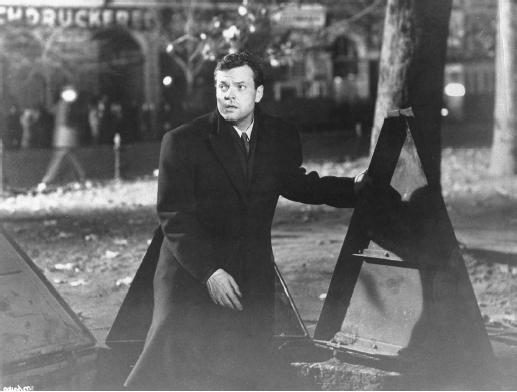
The Third Man

The Third Man, directed by Carol Reed 1949.

Generally regarded as a classic of cinema history, I wasn't sure what to expect from Carol Reed's The Third Man. I openly admit I really knew nothing about the film going into it. It just happens to be one of those films that has somehow escaped my notice when it probably shouldn't have.

As the credits rolled I got rather enthused upon seeing that the film starred not only Joseph Cotton, but Orson Welles as well. Perhaps it was due to this excitement that I was a little disappointed that Welles never physically shows up on screen until perhaps the last 30 minutes of film. In a way its a shame because the dynamic tension between Cotton and Welles lights up the screen with its brilliance. But I am getting a little ahead of myself.

The story is a classic suspense/thriller in which the main character, Joseph Cotton, arrives in Vienna only to discover the friend he is supposed to meet with had been run over and killed by an automobile. Cotton quickly becomes suspsicous and starts snooping around in business that will only lead to trouble. Soon enough he discovers there was a 'third man' at the scene of the accident and Cotton becomes convinced that his friend, Harry Lime, was murdered.

All in all the story moves along well enough and at times I really got sucked into things but overall I found it also falters, seriously at times, leaving me with a mediocre taste in my mouth.

Some of this I attribute to the script. There are too many rough edges. Cotton's character is a hack writer who no one has ever heard of. After so much is made of this fact it is almost entirely dropped for the rest of the film. They play on the fact that Cotton is now living out the type of story he himself might have written, except it is not executed very well. The primary scene in which Cotton finds himself launched into the Q&A presentation he forgot he agreed to do echoes Hitchcock's The 39 Steps but failing to be as nearly as effective.

The other aspect that I had issues with was the directing/cinematography. Watching the film it felt like there were literally two people making the decisions behind the camera. At times I would in awe of the images unfolding on the screen but then there were other times I cringed and could only scratch my head at what was happening. Particularly the excessive use of dutch angles got annoying after awhile. At first I figured there most be some active reasoning in the choice of the shots but after consciously following and marking when dutch angle shots were used it became increasingly apparent that it was random. Perhaps Reed saw it as 'edgy' and therefore appropriate for the material that he was working with, and perhaps the audiences felt the same way at the time, but it definitely has not aged well.

There also seemed to be some indecision with the character of Anna Schmidt. For such a significant part I was surprised how ambigous the character actually is. It's as if they couldn't decide if they wanted her to be a femme fatale or not and so ended up just leaving things somewhere in the middle.

All that being said, I did enjoy the movie, particularly when Orson Welles finally arrives. The gravity and presence he commands on screen is almost overwhelming at times. In a few short minutes he is able to communicate one of the most delicously twisted villians I've seen on screen for a while. Please though, don't let my negative comments about the film dissuade you from seeing it. The Third Man definitely has its moments, I just expected more of them.

Friday, September 15, 2006

Flickering Lights

Flickering Lights (Blinkende lygter), directed by Anders Thomas Jensen 2000.

I'm beginning to think that the Danes are starting to develop a monopoly on action/comedy films that are character pieces rather than special effects vehicles and slick killing sprees. The Pusher Trilogy is a prime example of this type of work, but I feel it is safe to say that no one does it quite like Anders Thomas Jensen.

I first had the pleasure of being exposed to Jensen's work while at the Sydney International Film Festival. By far my favorite film of the festival, Adam's Apples was a breath of fresh air (you can read my review of that film on this site as well). The type of thing you hadn't even realized you were missing so badly until you are confronted with it.

So when my step-mother asked me if there was anything I had in mind for my birthday, the two Jensen films available on Amazon.com were the first thing I mentioned. Several weeks later the long-awaited package arrived. Inside waiting for my viewing pleasure was Flickering Lights and The Green Butchers. I decided to start with the earlier film and work my way forward and so in went Flickering Lights.

It's always dangerous going into a film with really high expectations, but thankfully Jensen did not disappoint. Though I have only seen two of his films he is quickly sky rocketing to the top of the talent pool in my opinion. His directing is spot on, and his writing perhaps outshines his directorial talent.

Flickering Lights follows the adventures of four men, low level thieves and thugs, who just can't seem to get out from under the thumb of the local big wig crime boss. While committing a robbery for the crime boss the boys take a peek inside the suitcase they are to steal, revealing millions in cash. Seeing their opportunity to escape they decide to make a run for it.

What appears to shaping up to be a action/adventure road movie turns into something else entirely when their van breaks down in the middle of the woods. Shacking up in a cottage, they have to learn to blend in with the locals until they are able to leave. The only problem is each one of them slowly realizes they don't want to leave. They'd like to stay, open up a restaurant, and start a new life.

At its heart the film is about the sometimes funny, sometimes touching relationship between four men that has developed since childhood. Coming from severely dysfunctional families, they found each other and formed a dsyfunctional family of their own.

It's about facing personal demons, realizing each person has their own quirks, that some may see as character faults, but others see as endearing. It's a feel good movie that comes in the most ridiculously anti-feel good movie packaging.

Cows may be shot, people's faces may smashed in repeatedly with shattered beer mugs, people will be murdered, but through it all you might be surprised to find yourself being as moved by the movie as Stefan is by the book of poetry, Flickering Lanterns, that he reads to pass the time.

Tuesday, September 12, 2006

Accattone

Accattone, directed by Pier Paolo Pasolini 1961.

The life and work of Pasolini is anything but average. Known for his frequent run in's with authority (rightly or wrongly accused) Pasolini never the less became known as one of Italy's greatest and brightest minds and filmmaker. Pasolini's most famous film may well be The Gospel According to Matthew and his most infamous may be Salo but Accattone surely stand on its own against either of those works.

Pasolini was always drawn towards those people that fall under the margins and periphery of modern society. Bored with the bourgeoisie, he found something far more interesting, vital, and energized in those characters and people that most would consider the bottom of the barrell if they consider them at all.

Accattone, Pier's directorial debut, establishes this immediately as the title refers to the main character, a man who has never worked in his life and manages a meager existence by being a second rate pimp.

There is a simple beauty to this film. A twist on the neo-realist movement, but eschewing any manufactured sense of naturalism. "New Wave neo-realism" as some academics term it. Shot almost entirely outdoors, but in the most run down parts of Rome, the film centers on characters who are without 'good' motivations and so the characters reflect the setting they are in. Through this a rare beauty is achieved, one that does not require love, but demands appreciation. You may not sympathize with any character in the film, yet there is a simple elegance to their construction, a primal center and ragged passion that even the most judgemental of viewers might begrudgingly admit they find themselves relating too.

And throughout the entirety of the film, you are left with a slightly unsettled, disturbed feeling. It could simply be the events taking place on the screen or perhaps it is because Pasolini seems to reserve judgment one way or another. It is enough that you see, ponder, and digest the lives of those most prefer to push further out on the margins, because if they get too close and we ponder just a little too long, you just might realize that the bourgeoisie society is the same and potentially worse that the sub-proleteriat community that is struggling to survive beneath their feet.

Wednesday, July 26, 2006

Don't Scan too Closely

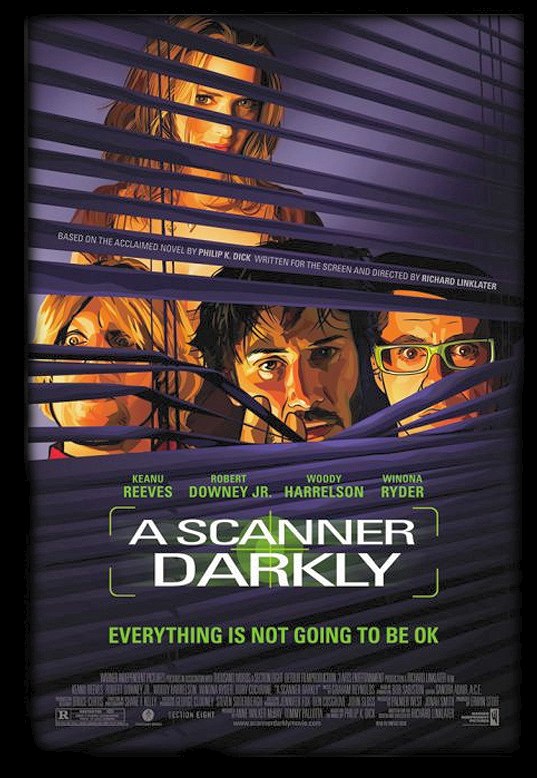
A Scanner Darkly, Richard Linklater 2006.

Choosing to make a film that is based on a book, a semi-famous book at that, is always a risky proposition. As the director you've immediately put yourself into the unenviable position of trying to create a piece of work that will not only appeal to a general audience but will also appease those large segments of people who live, breathe, and love the piece of literature you are about to have the 'audacity' to meddle with.

And if only it was that simple. But things can be broken down a step further. There are those people who believe a film adaptation should be word for word, page for page verbatim to which the original literature piece the adaptation is based.

Personally I don't fall into that category. I believe that it is expected that a film will change, modify, and mold that beloved piece of literature into something new. Not only will you have envisioned things differently than the director, but despite some protest to the contrary, film is its own artistic medium and a director is bound to put his own artistic imprint on said piece.

So it is with this frame of mind I would walk into a film such as A Scanner Darkly. However, I personally haven't read Philip K. Dick's story that this film is based on, so if you are looking for any scoop on how accurate the film adaptation is you need read no longer.

The other much talked about aspect of this film is the choice to use the unique animation technique called rotoscoping. I personally have no issues with animation, sometimes even going so far as to be a proponent of the medium (Miyazaki's work would be a prime example). The animation is actually quite well done, my only complaint being that it seemed that the film occasionally lost some of its emotional impact due to the rotoscoping format. Actually I've not really decided whether or not it was the rotoscoping or simply how Linklater chose to utilize it that was the problem.

Either way the film is an enjoyable ride. Not much occurs through its duration other than talking. Think continual conversations such as the ones Samuel L. Jackson and John Travolta have in Pulp Fiction. Interesting, funny, but ultimately more shallow than it would like to appear.

And I think that's what really got me about the film. Maybe I've been spoiled after such a great piece of filmmaking like Bladerunner, but there just doesn't seem to be anything anchoring this particular film to the ground. When I saw Bladerunner I was left thinking about it for days. Contemplating everything from the cool set design to some of the interesting issues the film touches upon. It also made me go and read Philip K. Dick's orginal story.

As much as I would like too, I can't say the same thing about A Scanner Darkly. The film has some great scenes and great moments ultimately it fell short of the expectations I had set for it. Perhaps I was asking for too much. It's fun and generally entertaining, but don't expect too much.

**and a half stars.

Sunday, July 09, 2006

Sydney International Film Festival 2006 Review


Well with my last review of Into Great Silence (if you haven't read that yet, stop reading this and read it!!!!) that brings my reports from the Sydney International Film Festival to a close.

It was quite the interesting two weeks. I spent most of it sick with bronchitis, yet I was still galavanting around between three different theaters around town, hopped up on antibiotics while trying to not to lose a lung.

I didn't know I had it in me to manage to essentially spend 5-10+ hours a day at the movie theater for two weeks straight, but I managed it. I do have to say I was exhuasted by the time it was all over. Besides that, I wouldn't have traded the experience for anything. Being a slightly smaller festival when compared to the likes of a Canne and other massive festivals the smaller environment made the filmmakers, actors etc much easier to approach and have access to if you had questions or simply wanted to chat. I'm still waiting for my friend to email me the photos she kindly took of me the at the opening night film and after party, but trust me it was a good time.

There were a couple of films I had to leave off of my reviews, namely a slew of short films and God on My Side but that is mainly because I've barely managed to squeeze in what I have and as far as God on my Side, well I'm still stewing that one over....its a film that definitely could spark debate and I'd like to word my thoughts extra carefully.

Oh and I missed Thank You For Smoking on closing night because I thought it would be more fun to visit the hospital......any way I'm fine, just missed out on a great night and from what I hear a great film.

Any way I thought it would be appropriate to end my coverage of the festival with a comparison of my favorites and the audience favorites. So without further ado.....

Best Feature (Audience): Little Miss Sunshine (ME): Adam's Apples
Best Feature Sidebar...played in smaller venues....(Audience): Fearless (ME): A Perfect Day
Best Documentary(Audience): An Inconvenient Truth (ME): Abstain
Best Doc Sidebar(Audience): Balanda and the Bark Canoes (ME): Into Great Silence

If you are curious as to all the awards and vote tallies etc, you can see them here:
http://www.sydneyfilmfestival.org/plugins/newsfeed.cgi?rm=content&plugin_data_id=13473

Well, I hope you enjoyed my thoughts on the films from SFF 2006. Feel free to ask me any questions if I like....

Sydney Film Festival 2006: Into Great Silence

Into Great Silence, directed by Philip Groning 2005.

And the Lord passed by.
Then a great and powerful wind tore the mountains apart and shattered the rocks before the Lord, but the Lord was not in the wind.
After the wind there was an earthquake, but the Lord was not in the earthquake. After the earthquake came a fire, but the Lord was not in the fire.

And after the fire came a gentle whisper.
1 Kings 19: 11-13

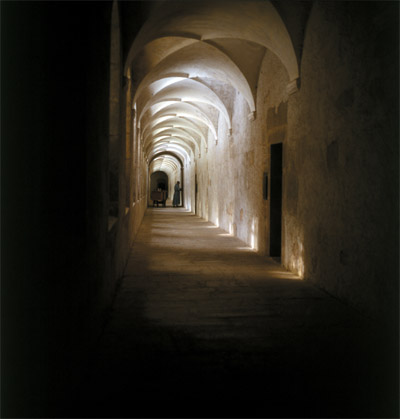
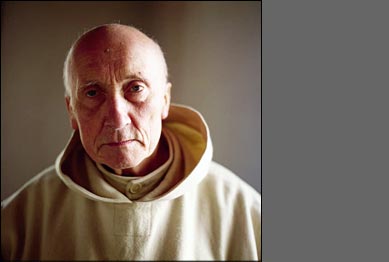
I honestly am tempted to simply make this post one collage of still images from the film so completely does it embody the visual medium of cinema.

Into Great Silence was one of the very first films to jump out and catch my eye when I was perusing the online catalog of films for the festival. Later, when I had to pick which films I would see it was one of the first I marked off. Finally, we had an opportunity to sit down and chat with the artistic director of the Sydney International Film Festival, Lynden Barber, and when I asked him about this film he basically said it was a film that you will either completely love or absolutely hate, but either way it was the very first film of the festival to sell out. In a festival complete with 200 films of varying nature, it says something that the first film to sell out was a three hour documentary......one that has less than 15 minutes of actual dialogue!

If you haven't managed to guess yet, I fall into the the former category.

Philip Groning first approached the monks of the Carthusian order back in the late 1980's about doing a documentary on them. Their response was that perhaps they would be ready in ten, maybe 15 years. 16 years later Groning received notice from the monks they were finally ready. 3 years later the film was finished and Into Great Silence was revealed to the public.

For those that are a little unfamiliar with the Carthusian monks, they reside in the French alps and follow a strict vow of silence. Living their lives in contemplation of their surroundings, the scripture, and God, the monks lives are simple yet there is something innately attractive about a lifestyle uncluttered with the noise and hustle of the average modern daily routine.

The film ends up being as much of a meditative experience as a documentary. There is no "soundtrack" to speak of, the only sounds being the ambient sounds of shoes on the floor or insects in the the glade. Amidst this "natural silence" is the occasional shattering of the quiet with the searingly beautiful notes of the monks songs.

Their chants roll like soft waves across the darkened chambers of the sanctuary. The screen is completely dark save the soft red flicker of one lone candle at the far end of the chamber. The darkness is punctured momentarily as a light turns on illuminating a monks face as he turns the page of the hymnal in front of him. It is a beauty that wraps you in its warmth and than drags you into the depths of your own soul. Completing this transition is cut to the outside of the monastery, draped in pristine white snow, in the middle of night, while the cinematograpy has been speed up, revealing the rotation of the earth as the stars fly past the tops of the surrounding mountain peaks.....and the monks chant on......

And so it goes for three hours. You see the monks get their hair cut, you see them eat, you seem them pray, tend the garden, feed the cats, even take some time to have fun sliding down the snowy mountain side on their feet until they fall down laughing. There is no narration, there is only visuals and your own inner monologue.

A documentary is designed to inform, to make you understand an issue or get a glimpse of a place, people, or culture. By the time Into Great Silence is finished I felt like I had been living with them, and that's about as high of praise as I can think of for a documentary film.

Predictably, as the film moved forward, the audience slowly left. The lady next to me kept pestering her husband, "God, will it ever end??" It came to me as I left the theater, almost half the audience could not still for 3 hours. They could not handle this silence filled with pristine beauty and the most meditative of moving experiences. How much more impressive is it that these monks live like this for their entire life?

Honestly I found myself seriously considering if I could handle the life that these amazing people have willingly chosen for themselves. There is something starkly alluring about leaving all the ridiculous noise of our daily routines for something simple, something beautiful. To be able to have all the time in the world to explore yourself, our world, and persue God.....in whatever form you may believe. In some ways I think I could, in others I feel I probably would fall shamefully short.

While the monks do take a vow of silence, they are, very, very, very occasionally allowed to talk and on one such occasion one of the oldest monks, who is blind, takes the time to talk about his faith and his views on God. It is oddly touching and stands starkly in relief to the overwhelming silence of the film.

If it comes out on DVD you know I will be going on about it so keep your eyes peeled. In conclusion I will leave you with another shot of the film.
P.S. Here are a couple of links in relation to the film:
Official website: http://www.diegrossestille.de/english/
Website with trailer (be patient as it is a tad slow to load): http://www.bavaria-film-international.de/htmls/filmpages/f02_023trai.html
****Four Stars


Sydney Film Festival 2006: Battle in Heaven

Battle in Heaven, directed by Carlos Reygadas 2005.

Words really can't describe how disappointed I was in this film. Billed as a highly controversial and though provoking piece of cinema, I found the film to be an excercise numbing the mind with its flacid content and penchant for excessively graphic images.

The only thing controversial about this film seems to be the fact that they have an attractive woman fully nude engaging in various sex acts with a much older mexican man who is also fully nude. This is not the "soft" simulated sex scenes you might find on a chessy late night cinemax flick. It's the real deal, or as close to as real as you can get without grabbing that XXX classification.

But don't get me wrong while that type of content is not my first choice on the list of things I'd like to see in a film, if its there I'll stick it out, if there's good reason for it. There is and was a lot of people completely enraged at the screenings of this film, purely because of its graphic quality, but really if you've seen any film such as In the Realm of the Senses than the graphic nature of Battle in Heaven pales in comparison.

The problem is, that's all there is too the film really. Perhaps there is some profound message that I am missing, but quite frankly the movie was so boring, in my opinion, that I was spending most of my energy trying to stay awake after awhile.

Ok, maybe I'm exxagerating a little bit on the sleeping part, but for good reason. Visually the movie is unimpressive, the acting is non-existent, and the music while sometimes inspired is not enough to save an otherwise horrid production.

I suppose I should at least tell you the premise of the film. Marcos works for a wealthy family and at somepoint shortly before the beginning of the film Marcos and his wife had kidnapped a baby. The only problem is the baby died on them by accident. So know Marcos is not in the best of situations. Any way he is still driving around his bosses daughter, who, for some unexplained reason, works at a 'secret' brothel. Oh and its obvious Marcos has a thing for Ana, his bosses daughter. Well Marcos needs to get things off his chest and he tells Ana what happened with the baby. This is where things should pick up (you would think) but Ana nonchalantly tells Marcos he should turn himself in and wanders off. The film meanders after this, and I have to mention.......since critics seemed to hail this as being particularly brave and daring.....even takes the time to show Marcos and his wife (both of whom weigh somewhere between 250-300lbs) having full on pornography style sex. Now I applaud the idea of 'normal' looking people having sex on screen rather than glam models, but there is a thing as carrying the point a little to far....personally I wouldn't want to subject anyone to having to see me nude on screen....much less having to witness a sex act involving people who are so overweight as to be putting themselves at severe health risks.

In the end, I kept asking myself where the film was going, what was it getting at, and what could I take from it. As hard as I tried a couldn't come up with a good answer. Personally, I would recommend that you save yourself the trouble and just rent In the Realm of the Senses by Nagisa Oshima. Much more graphic of a film, but at least there is some depth to the movie, and seeing as it came out in 1976 you'll quickly realize just how regressive a film like Battle in Heaven really is.

*One Star

Thursday, July 06, 2006

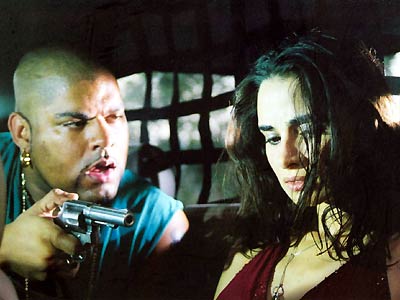
Sydney Film Festival 2006: Secuestro Express


Secuestro Express, directed by Jonathan Jakubowicz 2005.

For those that don't know, Secuestro Express stands for 'kidnapping express'. It is not uncommon for people to be kidnapped in Caracas, Venezuela as a means to acquire a quick influx of income. The idea being that a kidnapping is made, a ransom immediately is demanded and within 24 hours the ransom has been received leaving the kidnapping victims to be randomly dropped somewhere.....shook up and emotionally hurt but otherwise ok.

This is the basis for the film and after a short, Guy Ritchie-esque intro to each of the main characters in the film, Carla and Martin are kidnapped by five men and there families are informed that a total of 60,000 (40,000 for Carla and 20,000 for Martin) is wanted for their well being.

The movie actually starts with a a very well done mixture of introduction fictional footage and a decent length montage of actual documentary footage which drives home the point that what is witnessed in the film may be 'fictional' but it is by no means fictional. What you witness in this movie in essence happens with frequent regularity.

As such this movie is not for the feint of heart. The ride it takes the audience on starts of dark and only gets darker and more intense as the film goes on. I found myself coming out of this film completely drained, more so than any film I've seen at the festival, with maybe the exception of Ahlaam. This is mainly because it is so real in its nature and subject matter. No matter what occurs in the film, your mind never detaches itself from the documentary footage seen at the beginning.

Take a look at your typical ransom type film in America. Generally the plot and narrative structure of the film will follow something like this: Introduction to nice family/characters, innocent character than kidnapped, ransom made and police are to not be involved, protagonist either involves police any way or simply becomes the hero himself, and rest of film follows protagonist as the kidnappers almost win but turn out to be ultimately defeated.

Secuestro Express is about as diametrically opposed to this structure as you can possibly get. Carla is the only character who comes close to approaching innocence in the film, especially since Martin becomes less and less an endearing character as the film moves forward. The cops are not involved in the story, there is no hero. Instead the director puts you right in close with the kidnappers and the kidnapping victims for the entire film and the dramatic tension is amplified because of it.

The movie ends up revealing itself to be a mish-mash concern of local class conflict, but more deeply it involves the overall social condition of much of the world. This may not be an exact quote but the film ends with a brief narration stating that "You can either kill the monster or become it". To me what I took from the film and this quote was that we have one of too choices. We can choose to help combat the problems facing our world...things such as poverty, starvation, malnutrition, greed, excessive materialism...or we simply are becoming part of the problem.

I haven't even mentioned the more technical aspects of the film, but suffice it to say they are all well done, especially the acting considering most of the cast is comprised of non-professionals. Mia Maestro, who is one of the only professional cast members, has the looks and acting talent to become the next major actress to make it big, following in the footsteps of Selma Hayek and Penelope Cruz.

A great film, just a really tough ride.

****Four Stars.

Monday, July 03, 2006

Sydney Film Festival 2006: My Nikifor


My Nikifor, directed by Krzysztof Krauze 2004.

My Nikifor is a Polish film based on the life of their famous amatuer artist Nikifor. The film eschews the traditional biopic formula and chooses to focus only on the last years of his life rather than follow the typical path of how he came to be an artist, what trials he went through etc. Depending on your tastes this can be a good or a bad thing, but for me personally I thought it was a good thing.

With the narrow temporal scope of the film, I felt more time was spent with the character of Nikifor, delving into this deeply eccentric persona and exploring the depths of a person shaped and worn through the many years of his life.

This film has been billed as a comedy, something that I was glad I didn't notice until after I had seen the movie. If you go into it expecting a comedy you will be sure to be disappointed. This is a dramatic piece. A good one at that.

Nikifor is played by actress Krystyna Feldman and the performance she turns in is absolutely stunning. I wanted to refuse to believe that Nikifor was being played by a woman even as the credits rolled at the end, so completely does she embody her role. Complimenting Feldman is Roman Gancarczyck who plays Marian, a working artist who somehow managed to find himself stuck with the unbearable Nikifor.

And thus a relationship begins in frustration but through the course of time develops into something different, one of admiration, oddly mentor-like and carrying shades of a father/son dynamic.

At times the film drags, but there is enough there to keep the film moving towards a touching, but not overly done ending. As far as biopics go, this film was wonderfully refreshing. Less melodrama, more character, good film.

***Three Stars

Sydney Film Festival 2006: A Side, B Side, Seaside

A Side, B Side, Seaside: Directed by Wing-Chiu Chan 2005.

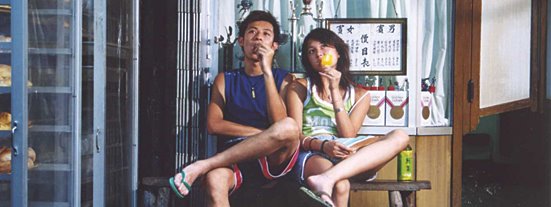
Falling into the category of films like Ghost World, and American Graffitti, A Side....follows the two seperate story lines involving kids who are growing up and moving apart as school ends and real life begins.

The film is told in three seperate parts, and overall it is a enjoyable glimpse into the joys and fears that comes with the coming of age that I think is universal no matter what culture you live in. It should be noted that the film is a little rough around the edges and could have used a little more polish, but this does not ruin what is otherwise a great film.

The first part follows Honey and three of her friends who are embarking on their summer holiday. We first see them as they manage to trick random pedestrians into giving them money so they can buy an adult vcd. Once this is accomplished they are off to spend what is sure to be an adventurous summer.

Keeping the focus on the dynamics between the three friends this part of the film is less about the actual events of their holiday and more about what comprises friendship. If you can remember spending the summer romping around with a couple good friends, with nothing to worry about but is immediately in front of you, then you'll have a good idea how this first part of the film plays out.

The second part of the film focuses on a different group of characters who happen to be in the same location. This time it is three best friends, two guys and one girl, and they have just been reunited with each other after having not seen each other for some time. It provides a nice counter-part to the earlier story line, and easily could be seen as representative to where Honey and her friends might find themselves in a few years time.

Finally the third part of the film attempts to tie things together, returning to Honey as she embarks on her journey to Beijing to start a new chapter in her life.

The best word I can use to describe this film is that its 'endearing'. I only wish the director chose not to play around with various camera tricks. He seemed to have a penchant for having the film play in reverse and it seemed to jar with the overall nature of the film. It was almost as if the director was not confident that the story alone would be enough to hold the audience's interest and threw in snazzy camerawork to try and liven things up......only he didn't need to, resulting in the illusion of the film being broken at the most random moments.

Still it was a good film, and one that I personally enjoyed.

***Three Stars

Sydney Film Festival 2006: Something like Happiness


Something Like Happiness, directed by Bohdan Slama 2005.

I really should have more to write about this film than I do, so I apologize ahead of time for the brevity of this review.

A Czech film that embodies everything that is great about independent art cinema, Something Like Happiness is a simple story about real people. The two main characters of the story Tonik and Monika take care of two children basically abandoned by their mentally unstable mother and one time friend of both of them. Amidst this, Tonik struggles to simply survive and keep his house, Monika awaits news from her boyfriend who has gone to America, and multiple other subplots emerge and disappear as they do in anyone's daily lives.

And in that way, this is what makes the film so interesting. It simply feels so real and down to earth. This fosters a sense of identification with the characters and the audience finds themselves pulling for the characters as they fight through their day to day struggles.

It's simple, its sweet, and its never quite 'happiness'.....but sometimes its the simplest things that can create the most pleasurable experiences...

***and a half stars

Sydney Film Festival 2006: Ahlaam


Ahlaam, directed by Mohammad Al-Daradji


According to the film festival program this film was shot in the streets of Baghdad during the US invasion in 2003, the cast and crew being subjected to kidnappings from both sides. After seeing this film I can believe every word of it.

Ahlaam is one of those films that leaves you completely emotionally drained when you leave the theater. The film is so immediate and in your face that you can't help but be swept up and carried away by the horrors of war and systematic devestation on the essence of humanity that fills the screen in front of you.

Jumping back and forth in time, the story follows the lives of three seperate individuals as their lives are simply ripped from under them. And by lives, I am referring to what makes these characters human. Confronted with the horrors of war on both the big scale and the smaller but infinitely more personal level, the charactes break down becoming mentally unstable or simply infantile in nature.

Surrounding the story line of these characters is the abundance of footage that simply could not have been staged, which lends a potent realism to the experience that left me amazed that the film was ever completed.

What really caused this film to rise to the top in my mind was its refusal to take sides. This is not a film preaching against the US or condeming Islamic fundemental extremists. This is film that simply shows that in situations like this, everyone is ugly, everyone is an animal, and no one is right. In that sense it is an anti-war film, but more importantly it is a vibrant document of on-going events that are sure to have long lasting, unforseen ramifications in the global arena.

****Four Stars

Sydney Film Festival 2006: Gravehopping


Gravehopping, directed by Jan Cvitkovic 2005.

A dark comedy that centers on a professional funeral speaker? I knew this one had to be good and Gravehopping more than lived up to my expectations.

The Slovenians seem to have an innate dark sense of humor and from the get go this came to the forefront in the film. Wasting no time, the film's first lines of dialogue are from Pero, the funeral speaker, quoting the infamous Australian serial killer Chopper, "Not everyone lives, but everyone dies." I should add that in the background the funeral band is playing "I Will Survive" polka style..... I know that's what I would like to be said and played at my funeral =).

Shortly after that there is a sequence where Pero almost falls from the window trying to put up a Slovenian flag on his house to celebrate their Independence day. Barely catching himself on the mounted flag holder, he hangs perilously from the wall of the second floor while his son looks up and drills him with questions about why they celebrate their independence day.....then Pero falls.....its a starkly black comedic moment and the type of humorous moments that are typical in this film.

As far as the story is concerned, the film takes it's time exploring the everyday lives of Pero, his family and the people they know. Interestingly, just when you think the movie can't get any darker, it does, and continues to progressively get more and more dark, shedding some of its humor for a very serious ending to the film. Somehow it works and what started out as a fun, black comedy ends as a dark dramatic piece that is deeply touching.

The film is comprised of some highly impressive technical cinematography, and like Dam Street there is moments, one in particular, where the image on the screen will forever stick with me. I'd describe it for you, but it just wouldn't be right and would ruin what is otherwise an incredibly powerful, emotional scene.

A film like this would fail if the characters weren't well constructed an interesting, but thankfully there is a great variety of likeable, colorful characters. From Pero's father who keeps trying to kill himself, to Pero's best friend Suki who is obsessed with cars to the point that he attaches blades on the wheels of his VW bug after seeing a classic chariot race movie on TV, each character is unique and entertaining.

In my mind Gravehopping is what independent film is all about.....

****Four Stars

Wednesday, June 21, 2006

Sydney Film Festival 2006: Dam Street

Dam Street, directed by Li Yu 2005.

I really wasn't sure what to expect going into this film. All I knew was that the director was a woman and that's rare in America, much less China. I was curious to see an Asian film from a female's perspective and thankfully my choice to see Dam Street was a good one.

It is not uncommon for Asian cinema to focus their stories on a main female character, however it is quite uncommon for that female character to only interact with men on a most peripheral level. While there are men in the film, Dam Street chooses to keep its focus on Xiaoyun and the relationships she has with her mother, her sister, and the neighborhood kid 'troublemaker' Xiaoyong.

I prefer to leave the specifics of the narrative out of this review because, not only does the film cover such a long period of time in these characters lives (so much so that the film itself periodically resorts to intertitles to advance the plotline) but it also contains little twists and turns that would be a shame to ruin for anyone who might end up seeing the film. If you're dying to know the specifics of the plot, there is a review by variety.com that seems to go into much greater detail in that regard.

Some would consider the story to be fairly standard fair, but I believe the film is much more about what is going on beneath the surface than what occurs purely from a point by point narrative basis. And again, the types of concerns that are considered in the film may have been done before, but how many people can say that they have seen it done from a woman's perspective?

Overall not only is it an entertaining film that will make you laugh, but it is a highly beautiful film. Beauty can be such a subjective thing, especially when it comes to cinema, but I personally guage beauty on whether or not there are images that will stay ingrained in my mind for life. Dam Street has several of these moments. One particular scene is a long take of Xiaoyun making her way down a street. As she does she passes by a bikecart that has been overturned, leaving all the fish it was carrying strewn across the ground. As Xiaoyun makes her way past two men frantically try and put the fish back in the cart, yet they haven't bothered to set it upright again, ultimately causing a never ending cycle of the fish immediately wiggling back out the cart they had just been thrown into. It is both a funny and touching scene. It is a scene that I think sums up the film.

*** and a half stars.

Sydney Film Festival 2006: A Perfect Day


A Perfect Day, directed by Joana Hadjithomas and Khalil Joreige 2005.

This film was a special treat for me, since to my knowledge I have never seen a Lebanese film. After seeing A Perfect Day, I hope it won't be the last Lebanese film that I get to see.

It's really weird trying to describe this film, in a sense absolutely nothing happens, and that is not an exaggeration. On the other hand, there is a lot that happens. It really all depends on how you look at it.

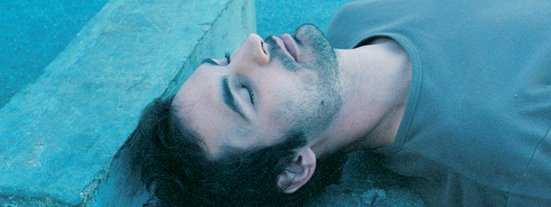
The premise of the film is that Malek and his mother Claudia are finally signing the papers conceding that Malek's father, who had been kidnapped 15 years before, is dead. The entire film occurs in approximately a day and basically follows Malek, who suffers from narcolepsy, as he wanders around. Malek switches between dealing with his mother and chasing after Zeina, his on again off again girlfriend who wants to end the relationship.

Now when I say that nothing goes on, I really mean it. If you approach this film from the classical Hollywood narrative tradition, it seems like the film never goes anywhere at all. However, I feel that many of the best films eschew anything remotely close to a traditional narrative and A Perfect Day is no exception to this sentiment.

The film is a highly brooding piece of cinema and the sense of longing practically drips off the screen into the audience seats. From the marked physical absence of Malek's father, to the unshakeable sense of a city, Beirut, that itself seems to have gotten lost along the way loss and longing presents itself in every frame.

There seems to be some heavy commentary about a generation that seems to be directionless, simultaneaously crippled by the absence of parental figures and the overbearing control of tradition that remains with those figures who are still around. It's a safe bet that if you were Lebanese you probably would have a much greater insight into the film, but even without that background there is a lot to mull over.

And throughout this piece, is some beautiful cinematography. Of particular note is a sequence where Malek drives through the dark streets of Beirut wearing Zeina's contacts, all shot in the obstucted vision that one experiences when looking through a prescription that is not meant for your eyes.

Finally, the film ends as abrubtly as any film I have witnessed in a long time. I literally was thinking to myself that if something didn't happend within the next couple minutes then nothing would when the credits just started rolling, illiciting audible mutters and frustrated gasps from an audience that probably was just as unsure as I was about what we had just witnessed. As I walked from the theater down to the bus stop, each step brought the realization that what I had just seen was a type of film that too often never gets to see the light of day and a film that deep down I truly enjoyed.

****Four stars.

Sydney Film Festival 2006: River Queen


River Queen, directed by Vincent Ward 2005.

When a film is loaded with acting talents like Kiefer Sutherland and Samantha Morton, you would hope that the finished product would be quite good. Yet, like is too often the case, I left the theater with the sour tinge of being let down.

Perhaps I am being a little too harsh. I did enjoy the film, yet it could have been so much better than what it is. The project was helmed by Vincent Ward, whose last directorial effort was the mediocre What Dreams May Come although he has since been involved with projects such as The Last Samourai. As the movie went on it became more and more obvious to me that Ward was unable to censor himself and as such was crippling the movie by trying to squeeze to many ideas into one film.

Arising loosely from Ward's own experiences with the native Maori tribes of New Zealand, this tale is taken partially from the true story of a woman who was kidnapped as a child only to be discovered decades later.

River Queen is set during the colonial times of New Zealand. A period in which the Maori tribes ended up fighting each other because of differing beliefs on what was the best route to retain their land. Amidst this setting is Samantha Morton's character, Sarah O'Brien, who has a had a child with a Maori man. The Maori man dies, but the grandfather of the child returns to kidnap him, leading Sarah to spend the next eight years of her life trying to find her son. She is eventually successful, but he is not the same son that she knew from years before.

The film fascillates between being a period piece, an attempted epic complete with 'grand' battle sequences, a smaller character drama ending up being ok on all counts but not truly good on any of these levels. What is more surprising is the fact that the special effects are at times painfully bad. A lot of things can be said about What Dreams May Come but one thing that is very notable about that particular film is its visual striking flair. For whatever reason, that is at times completely lost in River Queen.

The acting is on a level of what you would expect from the likes of Morton and Sutherland, but in the end its not enough to save this unfocused collage of a film. Despite all this I did enjoy the film, but its definitely not anything near what I would term as a great film.

** and a half stars.

Sydney Film Festival 2006. La Samourai


La Samourai, directed by Jean-Pierre Melville 1967

This year's retrospective at the Sydney International Film Festival was on the famous French director Jean-Pierre Melville. La Samourai, perhaps Melville's most famous film, also happened to be the film from the retrospective I had the chance to see. Being such a classic film I am rather hesitant to say much, since so much has already been written on the director and his films......and honestly do I really need to say more than, "Melville, Alain Delon. See it."

Of course I guess that would be cheating. I do have to admit that much to my shame I am not really familiar with Melville's work. Something that I intend on correcting, not only because of my love of French cinema, but because La Samourai is such an excellent film.

I really did not know much about the film other than the title going into the theater and as such I was surprised by how much of a silent film La Samourai actually is. While this isn't a complete rarity, it is something that causes Melville to stand apart from other famous French directors like Truffaut and Godard. In this film Melville seemed less concerned with the dialogue and much more focused on the atmospheric elements and overall ambient quality to the film. The result is leaving the audience to purely contemplate the visual composition of what is being projected rather than have things clouded by the particular plot elements of what amounts to a film noir of the highest order.

I personally really loved this film although I was a little disappointed with the quality of the print they used at the festival. Despite the print showing its age, it did not detract from my experience. Melville was an influence on director's such as Godard(so much so Melville makes an appearance as the writer in Breathless), and for good reason.

*** and half stars.